Articles

Report: Battling the Jinn

Exorcism and Islamic Healing in Syria

By Olivier Moos, 21 September 2026

Belief in jinn, witchcraft, curses, and spirit possession remains fairly widespread across the Muslim world, yet contemporary studies of exorcistic traditions seem to have largely overlooked Syria. Drawing on fieldwork conducted in Idlib, Damascus, and Deraa, including interviews with religious healers, patients, and government officials, this article examines the contemporary practice of ruqyah, focusing on the beliefs, therapeutic practices, and competing forms of religious authority that shape it.
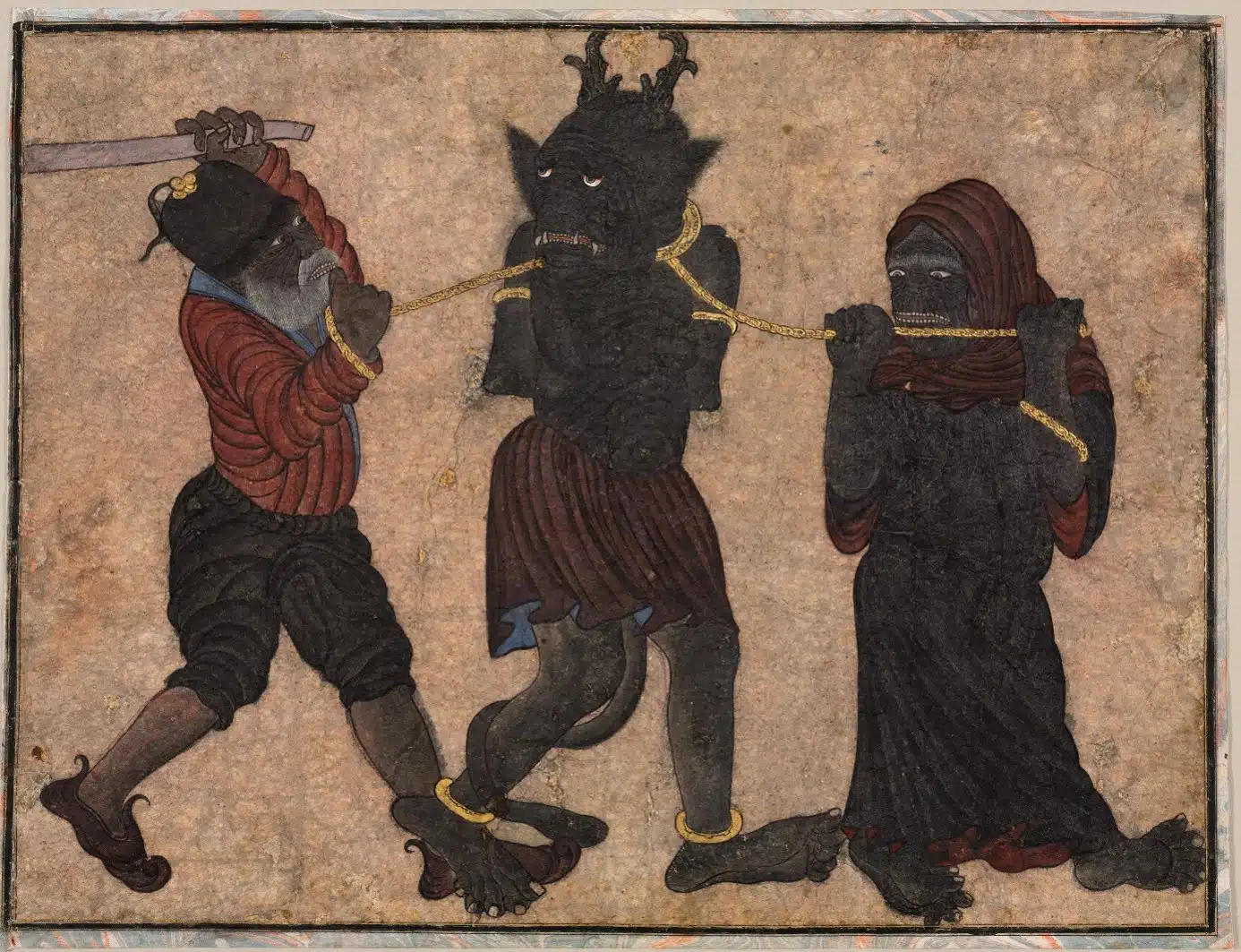
Demons Binding and Being Bound, attributed to Mehmed Siyah Qalam, Topkapi Palace Album (Hazine 2153, fol. 31b), late fifteenth century. Topkapi Palace Museum Library, Istanbul.

More than a ritual of exorcism, ruqyah provides a framework through which psychological distress, erotic dreams, or unexplained misfortune can be understood within a world populated by flying jinn, wandering entities, powerful Jewish spirits, pious Muslim poltergeists, and lascivious shayatin. The article also examines recent efforts to bring religious healing under official supervision in post-Assad Syria.

To read the full report (25 pages), click here to download the PDF 

.customFieldBox { padding-top: 20px; border-top: 1px solid #dddddd !important; } .citationBloc { font-size: 16px !important; margin-left: 40px; margin-bottom: 10px; } figure.pf-caption { width: 100% !important; margin: auto !important; margin-bottom: 20px !important; } #pf-content img { margin: auto !important; }